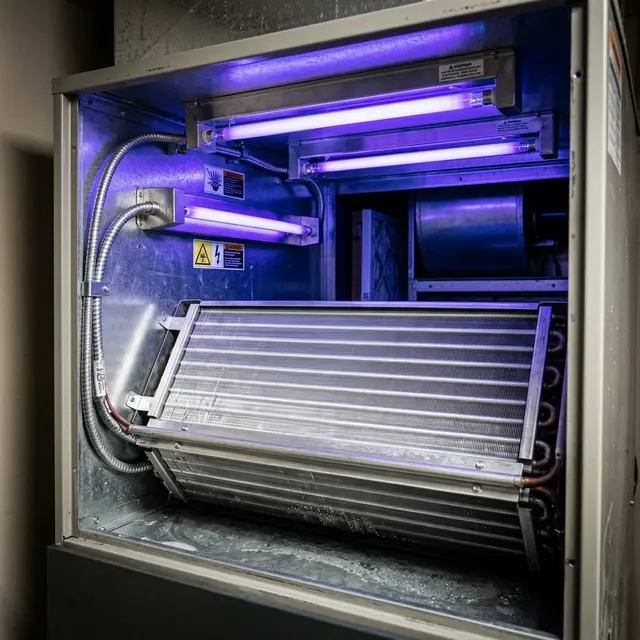
A UV light for HVAC provides continuous sterilization of airborne bacteria and biological growth on your evaporator coil, with bulbs lasting 1-2 years before needing replacement - worth it for allergy sufferers and homes with humidity issues.
How UV Lights Work in HVAC
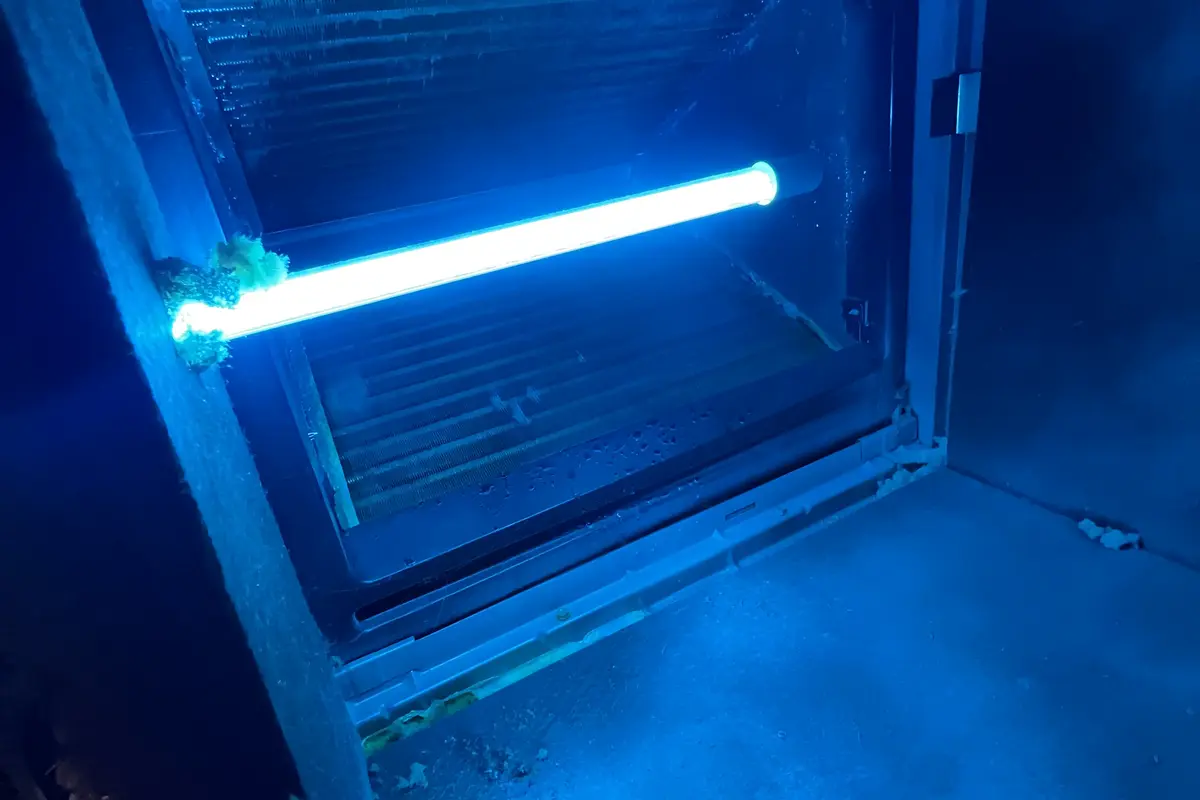
UV-C germicidal lights are installed inside the air handler, typically near the evaporator coil. As air passes through the system, the UV light damages the DNA of bacteria, viruses, and biological spores, preventing them from reproducing. A secondary benefit: the UV light keeps the evaporator coil clean by preventing biological growth, which improves efficiency and reduces musty odors.
The technology is the same used in hospitals and water treatment facilities, scaled down for residential HVAC. UV-C light at 254 nanometers disrupts the DNA bonds in microorganisms, rendering them unable to reproduce. The exposure time matters - a coil-sterilization light works because organisms on the coil surface receive continuous exposure for hours. Air-sterilization lights need to be more powerful because air moves past the bulb in seconds, so the UV intensity must be high enough to damage organisms during that brief window.
Detailed Cost Breakdown
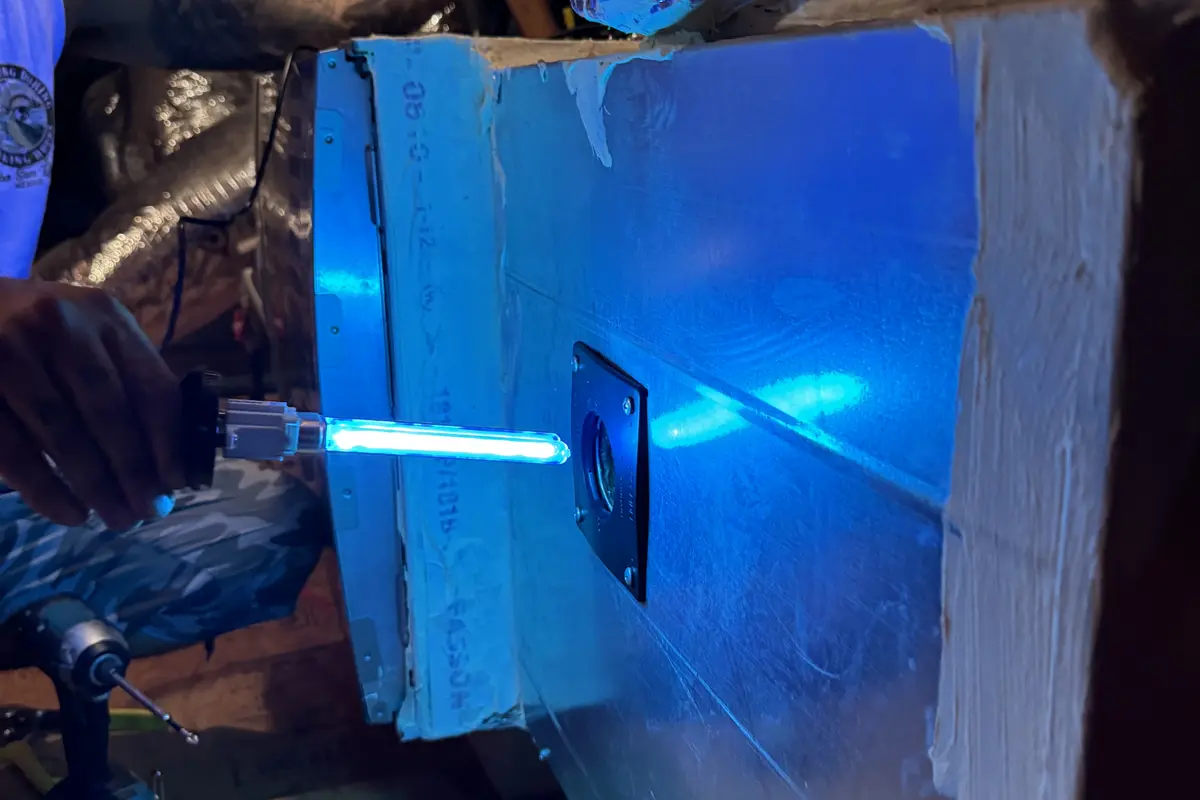
Coil-sterilization UV light (basic): the most affordable option. This stays on 24/7 and keeps the coil clean. It uses a single UV-C bulb positioned to illuminate the evaporator coil surface. This is the most popular option for Austin homeowners because it addresses the most common complaint - musty odors from biological growth on the coil. Installation takes about an hour and requires cutting a small hole in the air handler cabinet for the bulb housing.
Air-sterilization UV light (advanced): a larger investment but more powerful, designed to sterilize moving air as it passes through. Some models use multiple bulbs or high-output lamps to maximize exposure. These systems reduce airborne bacteria, viruses, and allergens throughout the entire home. They are best for households with allergy sufferers, asthma, or immunocompromised family members.
Ongoing costs are minimal: replacement bulbs are needed every 12-24 months depending on the model, and electricity usage is comparable to running a standard light bulb. UV bulbs lose effectiveness over time even if they still appear to glow - most manufacturers recommend replacement at 12 months for air-sterilization units and 24 months for coil-sterilization units.
Coil Efficiency Improvement Data
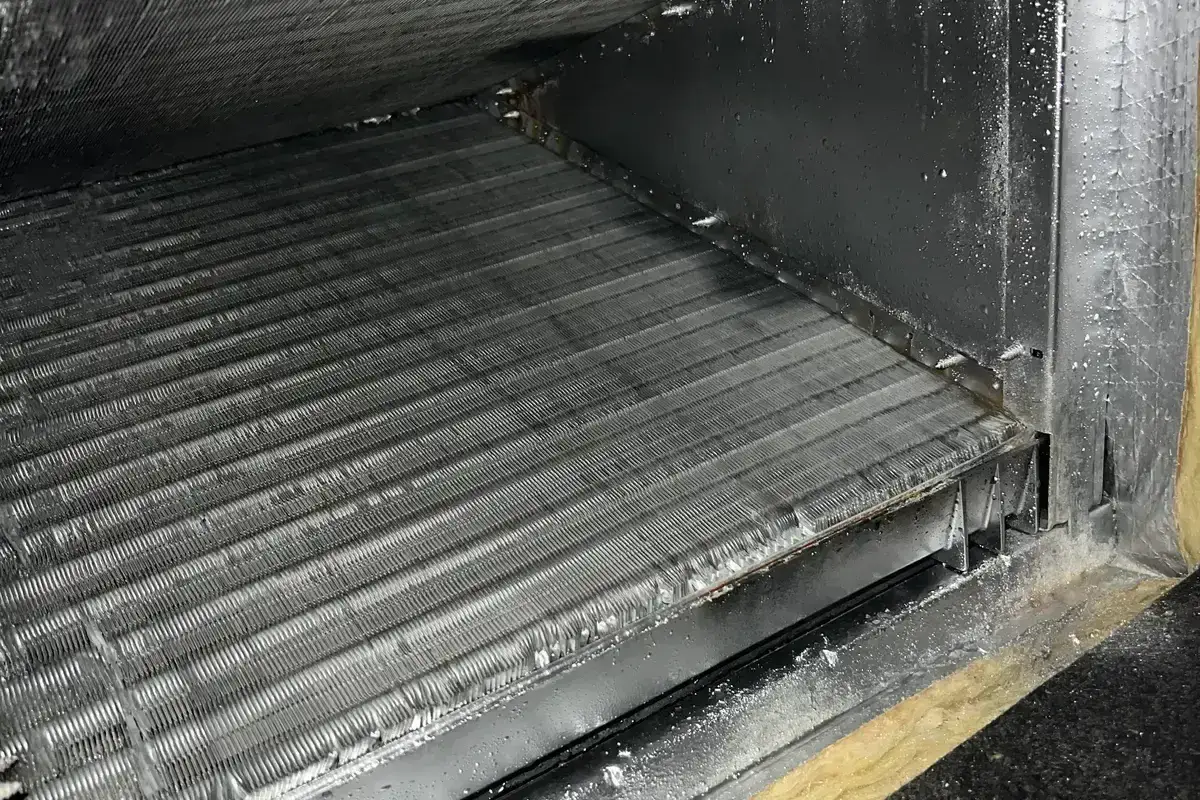
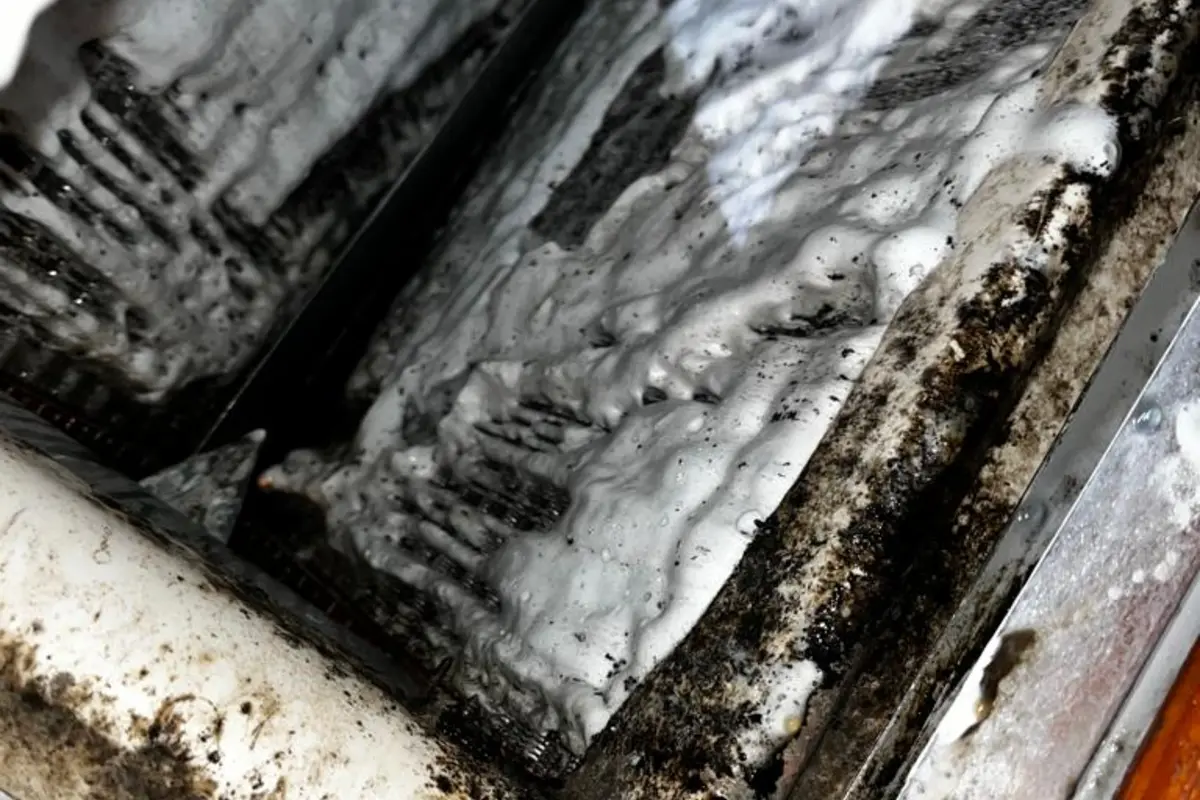
Your evaporator coil is a dense matrix of thin aluminum fins that absorb heat from indoor air. When biological growth coats these fins, two things happen: the insulating layer reduces heat transfer (the coil cannot absorb heat as effectively), and the growth restricts airflow through the fin gaps (reducing the volume of air the system can cool per cycle). Studies by ASHRAE (American Society of Heating, Refrigerating and Air-Conditioning Engineers) have shown that a dirty evaporator coil can reduce cooling capacity by 20-30%.
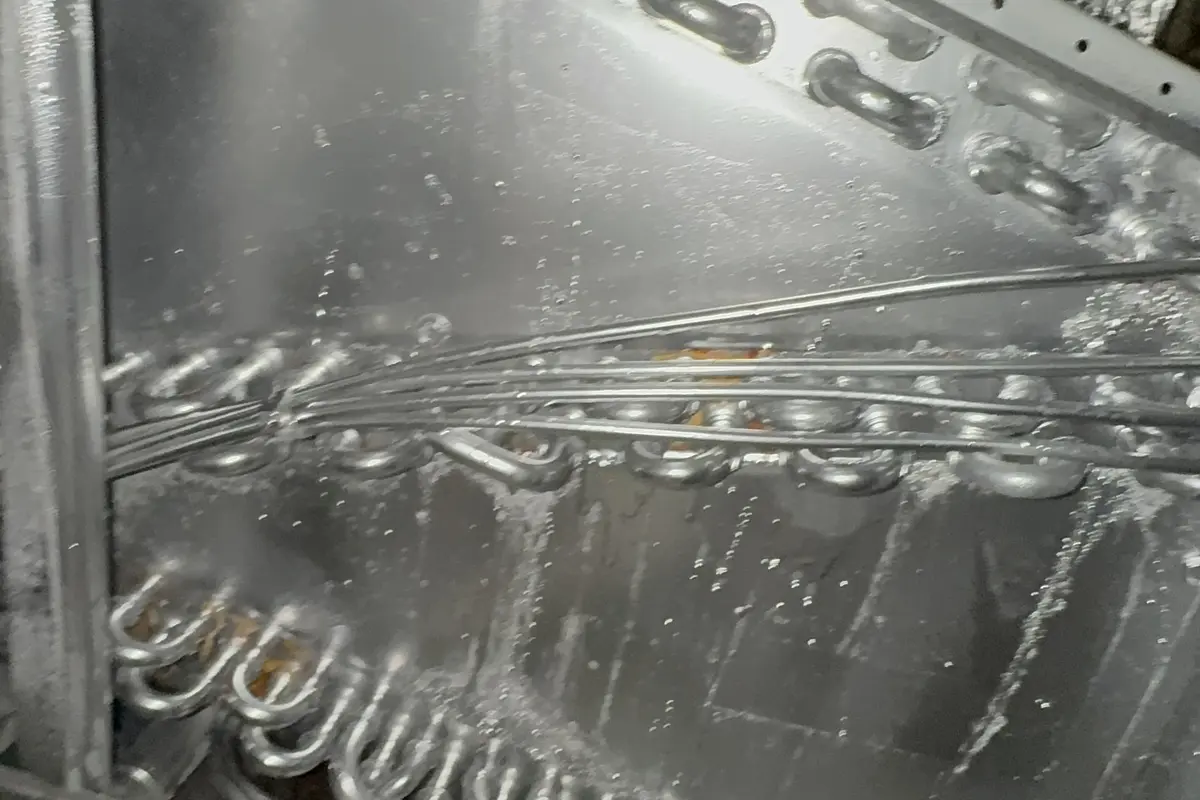
A UV light prevents this buildup from ever forming. In Austin's humid climate, where indoor humidity regularly pushes 55-65% during summer, evaporator coils without UV protection can develop visible biological growth within 6-12 months. This is especially common in systems that run constantly during our 100F+ summers - the coil stays wet for extended periods, creating ideal growth conditions. With UV, the coil stays clean indefinitely, maintaining factory-spec efficiency without manual cleanings.
Who Benefits Most
Allergy and asthma sufferers - UV lights reduce airborne biological triggers. Homes with humidity issues - Austin's humidity feeds biological growth on evaporator coils, causing musty odors. UV eliminates this. Pet owners - reduces airborne bacteria associated with pet dander. Households with immunocompromised members. Homes where the AC runs constantly (more air passes through, more sterilization occurs).
In Austin specifically, homes near bodies of water like Lake Travis, Lady Bird Lake, and Barton Creek tend to have higher indoor humidity and benefit most from UV installation. Homes in shaded, wooded lots in areas like West Lake Hills and Rollingwood also see faster biological growth due to reduced sun exposure on the home and higher ambient moisture levels.
ROI Analysis
Direct savings: a clean evaporator coil operates 10-15% more efficiently, saving $50-$100/year on energy. Reduced coil cleanings that you no longer need as frequently. System longevity: a clean coil reduces strain on the compressor, potentially extending your AC system's life by 2-3 years (delaying a $5,000-$10,000 replacement). Health benefit: hard to quantify, but reduced sick days, fewer doctor visits, and lower allergy medication costs add up. Many Austin families spend $50-$100/month on allergy medications and treatments during peak seasons.
Payback on a UV light investment is typically 3-5 years through energy and maintenance savings alone. When you include the health ROI and extended equipment life, the total return over 10 years is significant. For a family spending $200/month on allergy medications, even a 20% reduction in symptoms would save $480/year - paying off the UV light in about one year.
Pros and Cons of UV Light in HVAC
The pros and cons of UV light in HVAC come down to continuous biological protection versus ongoing maintenance costs - and for most Austin homes, the benefits outweigh the drawbacks. Here is an honest breakdown based on real-world performance in Central Texas HVAC systems.
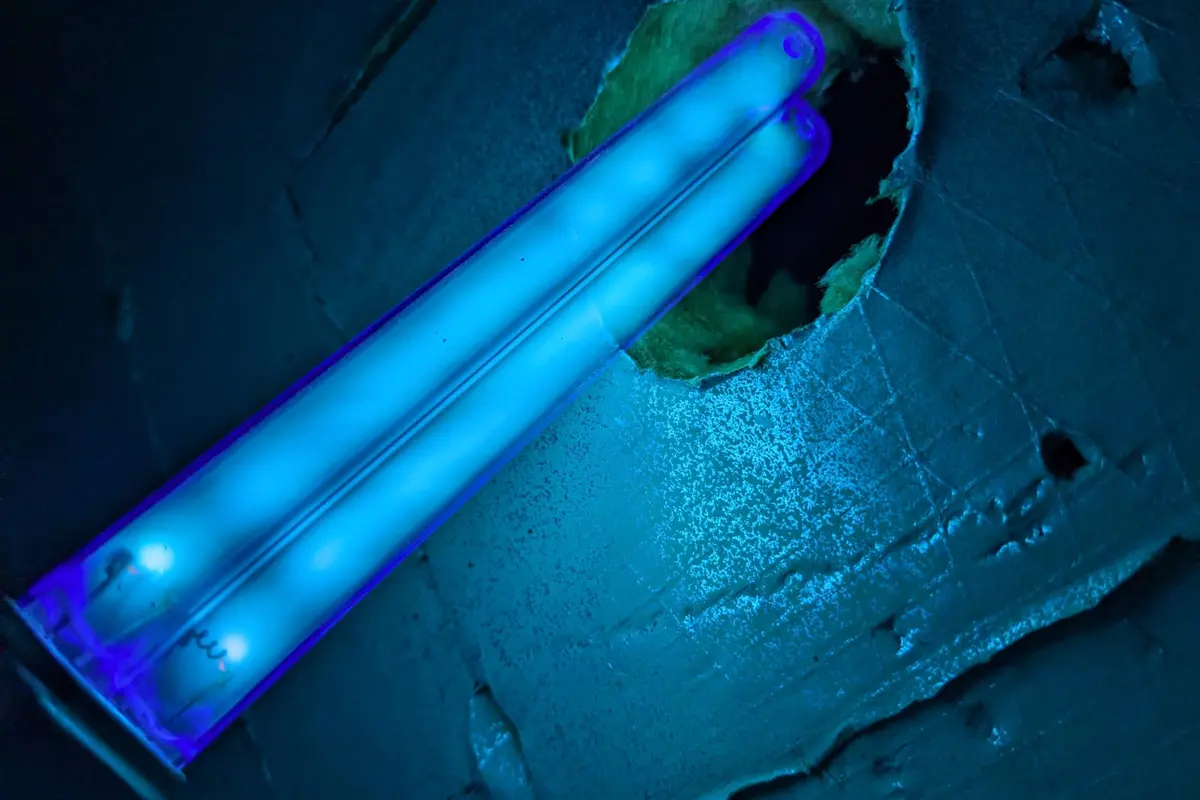
On the pro side, UV-C light kills bacteria, viruses, and biological spores continuously without any action on your part. Once installed, the lamp runs 24/7 inside the air handler, sterilizing the evaporator coil surface and the air passing over it. This prevents the biological buildup that causes musty odors - one of the most common complaints from Austin homeowners, especially during the humid months from April through October. UV light also keeps the evaporator coil clean, which maintains factory-spec airflow and heat transfer efficiency. A clean coil runs 10-15% more efficiently than a coated one, which translates to measurable energy savings. The lamps use very little electricity - comparable to a 40-watt light bulb - so operating costs are minimal. For households with allergy sufferers, asthma, or immunocompromised family members, the reduction in airborne biological contaminants provides a genuine health benefit that is difficult to achieve with filtration alone.
On the con side, UV light does not remove dust, pet dander, pollen, or other particulate matter from your air. It kills biological organisms but has no effect on non-living particles. You still need a quality air filter (MERV 8-11 minimum) to capture particulate. UV-C bulbs lose effectiveness over time even though they continue to glow visibly. Most manufacturers recommend replacement every 12-24 months depending on the model, which adds $50-$100 per year in maintenance cost. The UV light only sterilizes what it can reach - organisms on the coil surface and in the air stream directly around the lamp. Duct surfaces far from the lamp do not receive UV exposure, so biological growth deeper in the duct system requires professional cleaning. Finally, not all UV units are created equal. Cheap units sold online often produce insufficient UV-C intensity to achieve meaningful sterilization. The bulb must output adequate wattage at the 254nm wavelength, and it must be positioned correctly relative to the coil surface for maximum coverage.
The bottom line for Austin homeowners: if you have recurring musty odors, allergy issues that worsen when the AC runs, or a history of biological growth on your evaporator coil, the pros significantly outweigh the cons. If your primary concern is dust and particulate, a filter upgrade is a better first step than UV.
Want to Know Where Your Energy Goes?
We identify the biggest efficiency gaps in your home and give you a clear plan to fix them.
Call (512) 601-4451Estimate how much you could save on energy bills
Is UV Light in HVAC Dangerous?
No, UV light in an HVAC system is not dangerous to you or your family when properly installed. The UV-C lamp is completely sealed inside the air handler cabinet, with no UV radiation reaching your living spaces. The same UV-C wavelength (254 nanometers) has been used safely in hospitals, laboratories, water treatment facilities, and food processing plants for decades.
The safety design is straightforward. The UV-C bulb is mounted inside the air handler, which is a sealed metal cabinet. The ductwork connecting the air handler to your vents is also enclosed. UV-C light travels in straight lines and does not bend around corners or pass through metal or ductwork material. Even if you stand directly in front of a supply vent while the UV light is operating, zero UV radiation reaches you because the light cannot travel through the duct walls or navigate the turns in your duct system.
Modern UV-C systems for HVAC include a safety interlock switch on the air handler access panel. When you open the panel for filter changes or maintenance, the switch automatically cuts power to the UV lamp. This prevents accidental exposure during routine service. The only scenario where UV-C exposure could occur is if someone removed the bulb from the housing and looked directly at it while it was powered on - which would require deliberate effort and would never happen during normal homeowner interaction with the system.
The UV-C wavelength at 254nm is specifically chosen because it is the most effective at disrupting microbial DNA while being contained within the air handler environment. This is different from UV-A (tanning beds) or UV-B (sunburn) wavelengths. UV-C is actually the easiest UV wavelength to contain because it does not penetrate glass, plastic, or metal. The air handler cabinet blocks it completely.
One common concern is ozone production. Some older or lower-quality UV lamps produce ozone as a byproduct, which can cause respiratory irritation. Quality UV-C lamps designed for HVAC use are manufactured with ozone-free quartz glass that blocks the 185nm wavelength responsible for ozone generation while transmitting the germicidal 254nm wavelength. When Air Central installs UV-C systems, we use professional-grade, ozone-free lamps positioned for maximum coil coverage and zero living-space exposure. Call (512) 601-4451 for details on UV-C installation for your Austin home.
Best UV Light for HVAC Systems in 2026
The best UV light for your HVAC system depends on what you want to accomplish - keeping the coil clean, sterilizing airborne pathogens, or both. There are three main types, each suited to different needs and budgets, and choosing the right one matters more than choosing the most expensive one.
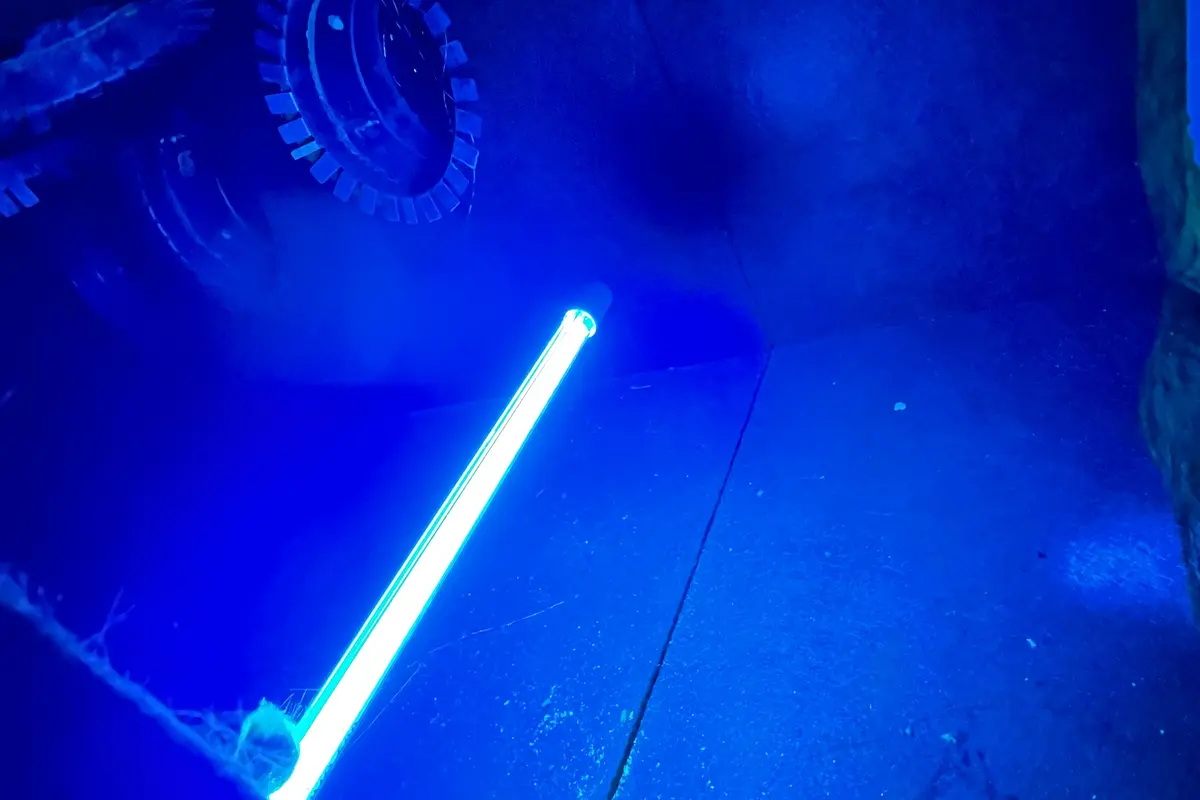
Coil-sterilization UV lights are the most popular type for Austin homes and the best value for most homeowners. These units mount inside the air handler with the bulb aimed directly at the evaporator coil surface. They run 24 hours a day, 7 days a week, providing continuous UV-C exposure to the coil. Because the coil surface is stationary and receives hours of constant exposure, even moderate-intensity bulbs achieve thorough sterilization. Coil units excel at preventing the biological buildup that causes musty odors, maintains efficiency, and keeps the drain pan cleaner. For the majority of Austin homeowners whose primary complaints are musty smell and coil contamination, a quality coil-sterilization unit is the right choice.
Air-sterilization UV lights are installed in the return or supply duct and are designed to treat the air as it passes through. Because air moves through the system at 400-900 feet per minute, these units require significantly higher UV-C intensity than coil units to achieve meaningful kill rates during the brief exposure window. High-output air-sterilization units use multiple bulbs or specialized high-intensity lamps. They are best for households where reducing airborne bacteria and viruses is the priority - homes with immunocompromised family members, severe allergy sufferers, or anyone who wants the highest level of air purification.
Combination units address both the coil surface and the air stream, using multiple bulbs or a dual-purpose design. These provide the most comprehensive UV coverage but cost more upfront and have higher bulb replacement costs since you are maintaining two or more lamps.
What matters more than type is bulb quality and proper placement. Not all UV-C bulbs output the same intensity at the critical 254nm wavelength. Cheap units sold on Amazon and home improvement store shelves often use low-wattage bulbs that produce visible blue light but lack sufficient UV-C output for effective sterilization. The result is a lamp that glows but does not actually kill anything. Look for units that specify UV-C output in microwatts per square centimeter at a stated distance - this is the measurement that determines actual germicidal effectiveness. Professional-grade units from manufacturers like Honeywell, Lennox, and RGF provide published performance data and are designed for the airflow conditions inside residential HVAC systems.
Proper placement is equally critical. A coil-sterilization bulb must be positioned to illuminate the maximum coil surface area. If it is mounted too far away, at the wrong angle, or blocked by the drain pan, its effectiveness drops dramatically. This is why professional installation matters - a technician who understands airflow patterns and coil geometry positions the bulb for optimal coverage, not just the most convenient mounting location.
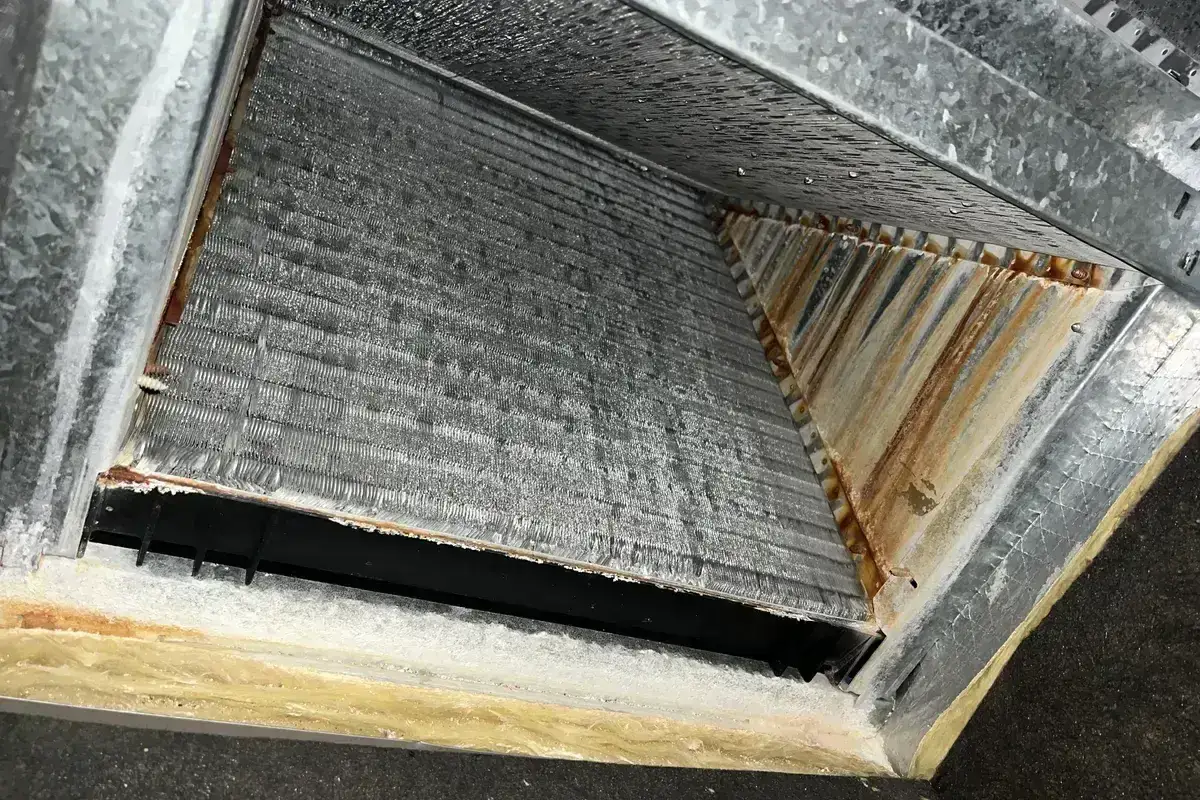
Is UV Light in Your AC System Dangerous?
UV-C light at 253.7nm is dangerous to eyes and skin with direct exposure - this is not something to downplay. Direct exposure to UV-C causes photokeratitis (a painful corneal burn similar to welder's flash) and skin irritation. However, when installed inside a sealed HVAC air handler, there is zero exposure risk to anyone in the home. The UV-C bulb sits inside a metal cabinet behind a sealed access panel. You cannot see it, touch it, or be exposed to it during normal operation. Think of it like your refrigerator light - it is inside a sealed box, and it only matters what happens in that box.
Safety concerns are valid but apply exclusively during installation and maintenance. Technicians wear UV-protective eye shields when working near an energized bulb, just as they would in a hospital or water treatment facility using the same technology. Modern residential UV-C units include a magnetic interlock switch on the access panel - when you open the panel to change a filter, the switch cuts power to the UV lamp instantly. You would have to deliberately bypass the safety switch and stare at the bulb to receive any exposure, which is not something that happens in normal homeowner interaction with the system.
The ozone question is the other common concern, and the answer depends on the wavelength. UV-C at 253.7nm produces negligible ozone - this is the germicidal wavelength used in HVAC systems specifically because it disrupts microbial DNA without generating harmful byproducts. UV-V at 185nm does produce ozone and is used intentionally in industrial ozone generators, but it has no place inside a residential HVAC system. Air Central installs only UV-C systems operating at the 253.7nm germicidal wavelength with ozone-free quartz glass, ensuring effective sterilization with zero ozone production inside your Austin home.
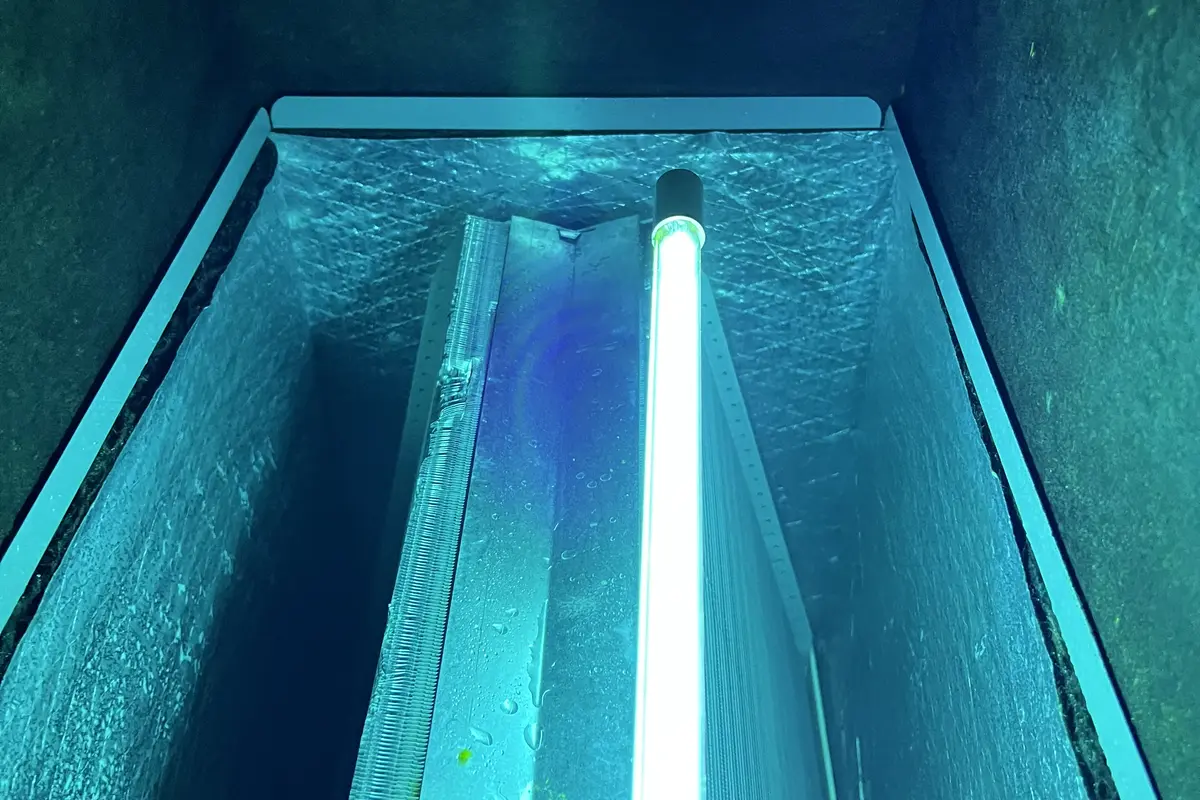
How Much Does UV Light for HVAC Cost?
UV-C coil sterilization light: $150-$400 for the unit itself, plus $100-$300 for professional installation, bringing the total to $250-$700 installed. This is the most common type installed in Austin homes and the best value for homeowners dealing with musty odors or coil contamination. UV-C air sterilization light: $300-$700 for the unit, plus $100-$300 for installation, totaling $400-$1,000. These higher-output systems treat moving air and are best for households with severe allergies or immunocompromised members. Combination systems that address both the coil and the air stream run $500-$1,200 installed and provide the most comprehensive UV coverage.
Annual bulb replacement is the only ongoing cost: $50-$150 per bulb, needed every 12-18 months. UV-C bulbs lose germicidal effectiveness over time even though they continue to produce visible light. Most manufacturers specify a 9,000-hour effective lifespan for coil units and 8,000 hours for air sterilization units. Skipping bulb replacement means the lamp glows but does not actually kill anything - a common mistake that gives homeowners a false sense of protection. Set a calendar reminder at the 12-month mark and replace the bulb regardless of whether it still lights up.
Austin-specific ROI makes UV-C a stronger investment here than in most cities. UV-C systems reduce biological growth on the evaporator coil, which means fewer AC service calls during Austin's brutal 6-month cooling season when the coil stays wet for hours each day. A single professional coil cleaning costs $150-$300, and most Austin homes without UV protection need one every 1-2 years. The UV light eliminates that recurring expense entirely. Factor in improved efficiency from a clean coil (10-15% reduction in cooling costs) and reduced allergy medication for sensitive household members, and most Austin homeowners recoup their UV-C investment within 2-3 cooling seasons.
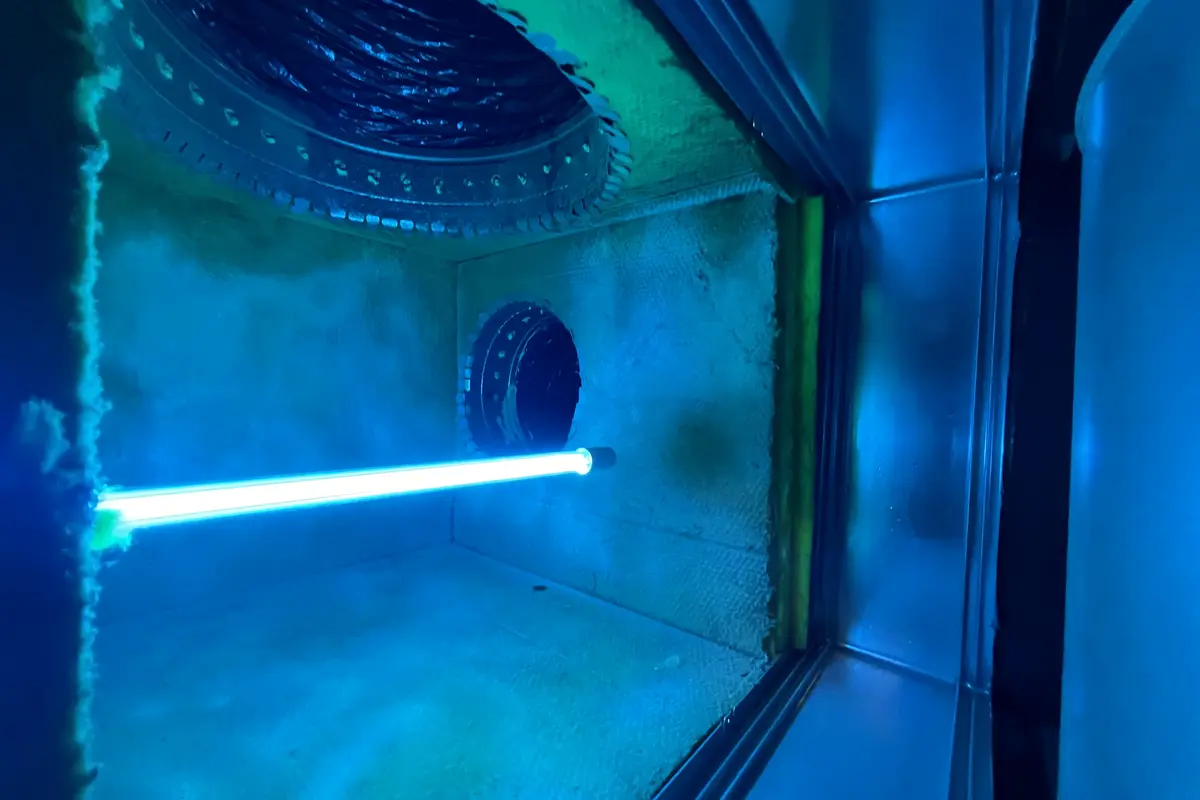
UV Light HVAC Installation and Cost
UV light HVAC installation costs $200-$2,000 depending on the type of system, with most Austin homeowners spending $300-$800 for a quality coil-sterilization unit professionally installed. The process is straightforward, typically completed in 1-2 hours, and does not require any modifications to your existing ductwork or electrical panel.
The installation process involves three main steps. First, the technician identifies the optimal mounting location inside the air handler by examining the coil orientation, available space, and electrical access. For coil-sterilization units, the bulb should illuminate the downstream (cold) side of the evaporator coil where moisture and biological growth concentrate. Second, the technician cuts a small hole (typically 1.5-2 inches) in the air handler cabinet, installs the bulb housing with a sealed grommet to prevent air leaks, and mounts the ballast (power supply) to the exterior of the cabinet. Third, the unit is wired to a power source - either hardwired to an existing circuit or plugged into a nearby outlet. The entire installation takes 1-2 hours for a single-bulb coil unit and up to 3 hours for a multi-bulb combination system.
Cost breaks down by system type. A basic coil-sterilization unit runs $200-$500 installed - this is the entry point and the best value for most homes. Mid-range coil units with higher-output bulbs and better build quality run $400-$800 installed. High-output air-sterilization units designed to treat moving air cost $600-$1,200 installed. Whole-home combination systems with multiple bulbs covering the coil and the air stream run $1,000-$2,000 installed. The price differences reflect bulb quality, UV-C output intensity, and the number of lamps included.
Annual maintenance cost is predictable and modest. Replacement bulbs run $50-$100 each, needed every 12-24 months depending on the unit type. Coil-sterilization bulbs that run 24/7 typically last 18-24 months before output drops below effective levels. Air-sterilization bulbs in high-output units may need replacement at 12 months. The bulb swap itself takes about 5 minutes - open the air handler panel (which triggers the safety interlock), unplug the old bulb, insert the new one, close the panel. Many homeowners handle this themselves, or it can be done during a routine HVAC tune-up.
The total cost of ownership over 5 years for a mid-range coil-sterilization unit is approximately $600-$1,000 ($400-$800 initial installation plus $200-$300 in replacement bulbs). Compared to the energy savings from a cleaner coil ($50-$100/year), reduced coil cleaning costs ($150-$300 per professional cleaning avoided), and the health benefits for allergy sufferers, the investment pays for itself within 3-5 years for most Austin households. Call (512) 601-4451 to schedule professional UV-C installation - Air Central serves Austin and 27 surrounding Central Texas cities.
Related Services
Learn more about our professional services related to this topic:
- Air Duct Cleaning - Remove dust, allergens, and debris from your entire HVAC system for cleaner indoor air.
- Solar Fan Installation - Solar-powered attic ventilation that cuts cooling costs naturally.
- Attic Insulation - Premium blown-in insulation to cut energy costs and improve year-round comfort.
- UV Lighting System - Eliminate bacteria and allergens inside your HVAC with UV-C light technology.
Want the full picture?
Read our complete guide: Home Energy Efficiency: The Cost-Saving Guide for Austin →Have questions about energy efficiency? Our team is available 7 days a week. Call us at (512) 601-4451 or visit our contact page.